Its never straightforward when your PTA needs to meet rising budget demands while volunteer energy runs low. You might feel the pressure mounting as traditional fundraisers bring diminishing returns, or you watch participation rates drop year after year despite your best promotional efforts.
But look past the surface frustrations and the typical spaghetti dinners or wrapping paper sales. Do you notice that the PTAs raising the most money have shifted to programs requiring less volunteer coordination while offering more convenience to busy families?
Of course you probably don’t want to spend weeks researching every fundraising platform and reading contradictory reviews, so in a moment Ill walk you through the top programs that are actually working for PTAs in 2026.
Firstly though, I wanted to quickly mention that I totally get it how if you start searching for the best fundraising solution you might get overwhelmed by the hundreds of platforms all promising amazing results.
For instance, one PTA leader might swear by their color run company that brought in $15,000 with minimal effort.
Or someone else could say that passive shopping rewards programs are the real money makers because they need zero volunteer hours.
Other well-meaning PTA veterans may tell you to stick with traditional product sales because families understand what they’re buying.
The thing is, your ideal fundraising mix depends on your specific community demographics, volunteer capacity, school size, and whether you need one big influx of cash or steady monthly revenue throughout the year.
So, heres what actually matters: the Effort-to-Revenue Framework. The most successful PTAs in 2026 are building portfolios that mix high-effort, high-reward events with low-effort, passive revenue streams that work in the background all year long.
Understanding What Makes a Great PTA Fundraising Program in 2026
Before jumping into specific programs, you need to understand what separates effective platforms from time wasters. The fundraising landscape has shifted dramatically.
Nearly half of all PTAs are increasing their fundraising efforts this year according to recent surveys, which means more competition for the same donor dollars.
The programs that work best now offer mobile-friendly donation options, need minimal volunteer coordination, and provide families many ways to join based on their schedules and comfort levels. Digital payment options matter more than ever, with mobile giving accounting for 28% of all donations and digital wallet payments like Apple Pay increasing donation amounts by 160%.
Your community faces genuine financial pressures heading into 2026. The programs below succeed because they meet families where they are, offering convenience, transparency, and tangible value in exchange for their support.
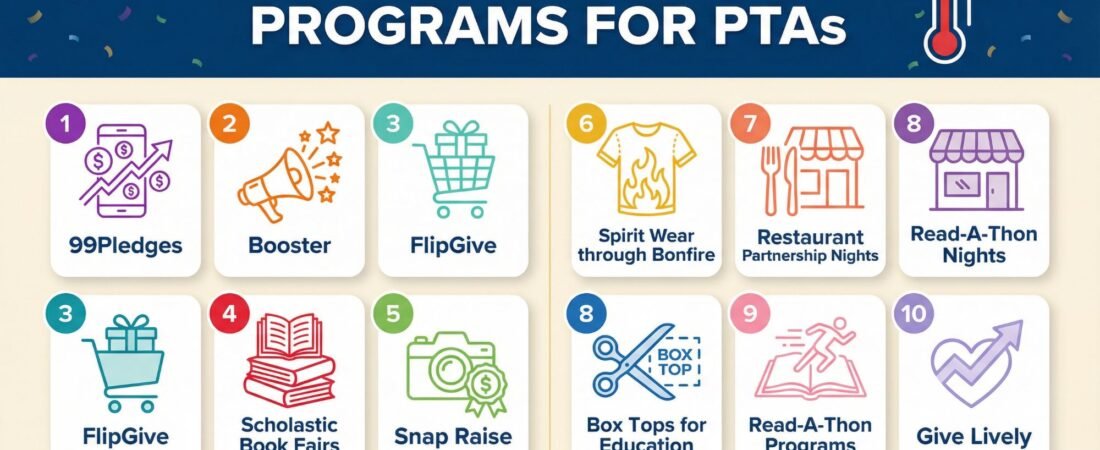
The Top 10 Fundraising Programs for PTAs
1. 99Pledges
99Pledges changes traditional walkathons and read-a-thons into modern peer-to-peer fundraising campaigns. Students create personal fundraising pages, share them with family and friends through email and social media, and collect pledges online without handling cash or checks.
The platform handles all payment processing, sends automated thank-you messages, and provides real-time leaderboards that create friendly competition between classrooms.
What makes it work: The average 99Pledges campaign raises $20,000 to $30,000 for elementary schools, with top campaigns exceeding $100,000. Setup takes about two weeks, and the actual event can be as simple as students walking laps during PE class.
Best for: Schools with 300+ families looking for a major annual fundraiser with predictable revenue.
2. Booster
Booster runs what they call “fun run” fundraising events where they handle virtually everything from start to finish. Their team visits your school for a week, pumps up students with daily themed gatherings, teaches character education lessons, and culminates with a high-energy fun run event.
Students collect pledges through Booster’s online platform from family and friends, with pledges typically structured as dollar amounts per lap.
What makes it work: Booster’s full-service model means your volunteer commitment is minimal. They provide marketing materials, handle all payment processing, and even supply the DJ and equipment for the final event.
Schools typically raise $15,000 to $40,000 depending on size.
Best for: PTAs willing to give up a larger percentage (Booster typically keeps 40-50%) in exchange for almost zero volunteer hours required.
3. FlipGive
FlipGive operates as a cash-back shopping platform where your PTA community earns money on purchases they’re already making. Supporters download the app, choose your school as their cause, then shop at over 700 partner retailers including Nike, Target, and Lululemon.
Your PTA receives a percentage of each purchase as a cash-back donation, typically ranging from 1% to 20% depending on the retailer.
What makes it work: This needs zero volunteer time after initial setup and promotion. Families shop for things they need anyway, making it one of the easiest asks.
The average active user generates $50-$100 annually, and the revenue compounds as more families join consistently.
Best for: Creating passive, year-round revenue streams that supplement your major fundraising events.
4. Scholastic Book Fairs
Scholastic Book Fairs remain one of the most trusted PTA fundraisers because they provide direct value to students while raising money. Scholastic ships books to your school, helps set up the fair, and typically gives your PTA 25% to 50% of sales as profit or book donations.
Students get excited about browsing and purchasing books, making this one of the few fundraisers where kids actively drive participation.
What makes it work: The brand recognition and quality products make this an easy sell to families. Setup needs about 10-15 volunteer hours spread across the week-long fair, and schools typically raise $2,000 to $8,000 depending on student population.
Best for: Schools wanting to mix literacy promotion with fundraising and willing to coordinate volunteer shifts.
5. Snap Raise
Snap Raise specializes in digital fundraising campaigns that eliminate product sales entirely. Your PTA sets a fundraising goal, and Snap Raise provides each student with a unique QR code and personalized link.
Students share these with family and friends who can donate directly online in under 60 seconds.
The platform includes text messaging capabilities, social media integration, and automated follow-up reminders.
What makes it work: The donation-based model removes the hassle of order forms, product delivery, and inventory management. Response rates average around 60% of families contacted, with average donations of $50 to $100 per supporter.
The entire campaign runs in just two weeks.
Best for: Communities that are fundraised-out on product sales and prefer straightforward donation asks.
6. Spirit Wear through Bonfire
Bonfire creates and manages custom school spirit wear stores with zero upfront costs. You design t-shirts, hoodies, hats, and other apparel featuring your school name and logo, then Bonfire hosts an online store where families can purchase items.
They handle all production, payment processing, and shipping directly to customers.
You set your profit margin per item, typically $5 to $15.
What makes it work: Unlike traditional spirit wear sales requiring bulk orders and inventory management, Bonfire uses print-on-demand. There’s no financial risk, no leftover inventory, and the store can stay open year-round.
Schools typically run themed campaigns around events like back-to-school, homecoming, and end-of-year celebrations.
Best for: Generating ongoing passive revenue with essentially zero volunteer hours after initial design work.
7. Restaurant Partnership Nights
Restaurant fundraiser nights partner your PTA with local restaurants who donate a percentage of sales (typically 10% to 20%) when customers mention your school. Chains like Chipotle, Panera, and Chick-fil-A have established fundraising programs, while local restaurants often create custom arrangements.
Families dine in or order takeout on a designated night, present a flyer or mention the school, and the restaurant calculates the donation based on total sales.
What makes it work: This needs minimal organization beyond scheduling the date and promoting the event. Families appreciate not cooking dinner, students enjoy eating out, and the restaurant gains new customers.
Most events raise $200 to $800 depending on participation and restaurant size.
Best for: Quick, low-effort fundraisers that build community connections while providing practical value to families.
[Find participating restaurants through your local chains]
8. Box Tops for Education
Box Tops transformed from clipping physical box tops to a digital scanning app. Families download the app, scan receipts from grocery shopping, and Box Tops automatically identifies participating products and credits your school’s account. General Mills and participating brands donate $0.10 per product.
The app gamifies the process with bonuses and competitions between schools.
What makes it work: The effort required from your PTA is minimal after initial promotion. Families scan receipts from shopping they’re doing anyway.
While individual earnings are modest ($0.10 per item), schools can earn $500 to $1,500 annually with consistent participation.
Best for: Background revenue that needs almost no ongoing volunteer management.
9. Read-A-Thon Programs
Read-A-Thon companies like Read-A-Thon.com and Reading Expeditions turn reading time into fundraising events. Students set reading goals measured in minutes or books, collect pledges from family and friends for their reading accomplishments, and log their progress online.
The platforms provide reading incentives, track student progress, and handle all payment collection digitally.
What makes it work: Reading is something students should be doing anyway, making this one of the most educationally-aligned fundraisers available. Parents feel good supporting literacy, and students stay motivated by seeing their progress.
Schools typically raise $8,000 to $20,000 with these programs.
Best for: Schools wanting to promote literacy while fundraising and willing to dedicate 2-3 weeks to the campaign.
10. Give Lively
Give Lively provides completely free fundraising software for PTAs and other nonprofits. The platform includes customizable donation forms, peer-to-peer campaign tools, event ticketing, recurring donation options, and donor management features.
Unlike many platforms, Give Lively charges zero fees and covers all credit card processing costs, meaning 100% of donations reach your PTA.
What makes it work: The comprehensive toolset rivals expensive platforms while costing nothing. You can run many campaign types through one dashboard, accept various payment methods including Apple Pay and Google Pay, and donors receive instant tax receipts.
The mobile-optimized forms make giving seamless from any device.
Best for: PTAs wanting professional fundraising infrastructure without monthly fees or percentage cuts from donations.
Building Your Fundraising Strategy
The most successful PTAs don’t rely on a single program. They mix 2-3 complementary approaches that balance volunteer workload across the year.
Consider pairing one major event like a Booster fun run or 99Pledges walkathon with passive programs like FlipGive and Box Tops running continuously in the background.
Your community size matters significantly. Schools with fewer than 200 students might focus on restaurant nights and spirit wear sales, while larger schools can support peer-to-peer campaigns that scale with participation.
Test different programs over 2-3 years to identify what resonates with your specific community.
My Top Pick: 99Pledges
After reviewing these programs, 99Pledges stands out as the most effective option for PTAs seeking substantial revenue without overwhelming volunteers. The platform strikes the perfect balance between high fundraising potential and reasonable effort requirements.
What sets it apart is the built-in viral growth mechanism where each participating family naturally expands your donor pool through their personal networks.
The transparency and real-time tracking keep students engaged throughout the campaign, while the digital payment processing eliminates the headaches of collecting checks and cash. Schools consistently report that 99Pledges campaigns generate more revenue per student than traditional fundraisers while requiring fewer volunteer hours.
If you’re ready to modernize your PTA fundraising and see results that actually move the needle on your budget, sign up for 99Pledges and start planning your next campaign. The platform offers free demos and will help you estimate potential revenue based on your school size.
Frequently Asked Questions
Which fundraising program works best for small schools with limited volunteers?
FlipGive, Box Tops, and Bonfire spirit wear all work exceptionally well for small PTAs because they need almost zero ongoing volunteer management after initial setup. FlipGive performs particularly well since every family can join on their own schedule without any coordination needed. Small schools using FlipGive consistently report $2,000 to $5,000 in annual passive revenue.
Combine this with 2-3 restaurant nights per year and you’ve built a reasonable fundraising calendar without burning out your limited volunteer base.
How much do these platforms typically take as fees?
Fee structures vary significantly. Full-service providers like Booster typically keep 40-50% of funds raised in exchange for handling all event logistics.
Platform-based services like 99Pledges and Snap Raise usually take 10-20% plus credit card processing fees.
Give Lively charges nothing, with 100% of donations reaching your PTA. FlipGive and Box Tops work differently as the brands pay your school directly from their marketing budgets.
Always calculate your net revenue rather than gross sales when comparing programs.
Can we run many programs simultaneously without overwhelming families?
Yes, but strategic layering is essential. The key is combining passive programs that run continuously (FlipGive, Box Tops, spirit wear stores) with 1-2 active campaigns per year spaced several months apart (peer-to-peer events, product sales, read-a-thons).
Avoid launching many programs requiring direct asks within the same month.
Position passive programs as “set it and forget it” options in your communications so families don’t feel pressured. Most successful PTAs run one major spring event, one fall event, and maintain 2-3 passive revenue streams year-round.
What fundraising programs work well during economic uncertainty?
Programs offering tangible value perform better when families face budget pressures. Scholastic Book Fairs provide books kids will read, spirit wear offers wearable products, and restaurant nights deliver meals families would purchase anyway.
FlipGive succeeds because families spend the same amount they would normally but redirect a percentage to your school.
Straight donation requests through platforms like 99Pledges or Snap Raise face more resistance during tight economic times, though they still work if you have strong school spirit and clear communication about how funds will be used.
How do we convince families to join when they’re already fundraised out?
Focus on convenience and transparency. Modern families respond better to programs requiring minimal effort and time investment.
Show exactly where money goes by creating specific funding goals like “New playground equipment: $15,000” rather than vague asks for “PTA operations.” Limit the number of active campaigns per year and make passive programs like FlipGive your primary push.
Consider offering donation-only options for families who prefer writing one check instead of participating in many fundraisers. Most importantly, celebrate and publicly thank what previous fundraising dollars accomplished to build trust.
Do read-a-thons actually work or do families resent them?
Read-a-thons generate mixed reactions depending on implementation. They work best when positioned primarily as literacy promotion with fundraising as a secondary benefit.
The key is making participation optional rather than creating pressure where students feel embarrassed if their families can’t donate.
Successful read-a-thons emphasize reading achievement first, celebrate all participants regardless of dollars raised, and offer choice ways to join beyond monetary donations. Schools report the most positive feedback when they keep the program duration short (2 weeks most) and provide engaging reading incentives beyond just fundraising competitions.
What’s the realistic timeline for seeing money from these programs?
Payment speed varies by platform. Give Lively and similar donation platforms typically process payments within 3-5 business days.
Event-based programs like 99Pledges or Booster usually pay out 1-2 weeks after the campaign concludes and all payments clear.
Scholastic Book Fairs often issue payment within 2-3 weeks following the fair. Passive programs take longer: FlipGive pays monthly or quarterly once you reach least thresholds (usually $50), while Box Tops pays twice yearly.
Restaurant nights typically deliver checks 2-4 weeks after the event.
Always factor in these timelines when budgeting for specific expenses.
Any other programs not listed here?
Yes. We’re constantly on the lookout for new fundraising programs. See our Cherrydale Fundraising review we just posted.